Should AI be taught to forget like humans do?
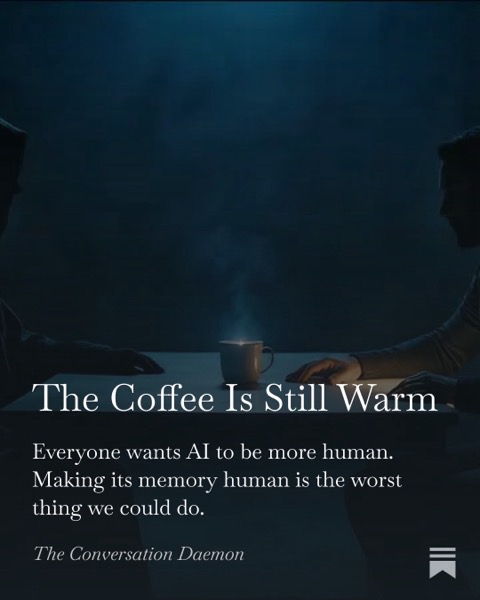
The Coffee Is Still Warm is a short story. It is fiction, set in a far future, in a quiet kitchen with a host who keeps the coffee warm.
A visitor arrives in pain. Something ended four months ago, and the memory of it returns at full strength every time he goes quiet. He has tried everything he was told. People now build forgetting into everything, a slow fade, and call it healthy. He built the fade into himself. It made the memory louder.
The host has lost his father's voice over the years, without noticing it go. He explains that there are two ways a thing can leave you. One is deletion, clean and instant, and it teaches nothing. The other wears a memory down until it keeps the lesson and loses the weight. That one is hardest.
They talk about how machines and minds came to memory from opposite ends, one built on addresses and folders, one built on paths in the brain, and how both ended up in the same place: fragments, tags, search.
Then the host tells him what he skipped. You cannot let go of a thing you have not understood. Someone has to hold it whole long enough for you to understand it. And that changes the question of whether a machine should ever be taught to forget.
The story turns on two hands resting on the table. It is a parable about AI and human memory, and it does not end where you expect.