Am I using AI to think, or just handing my thinking to it?
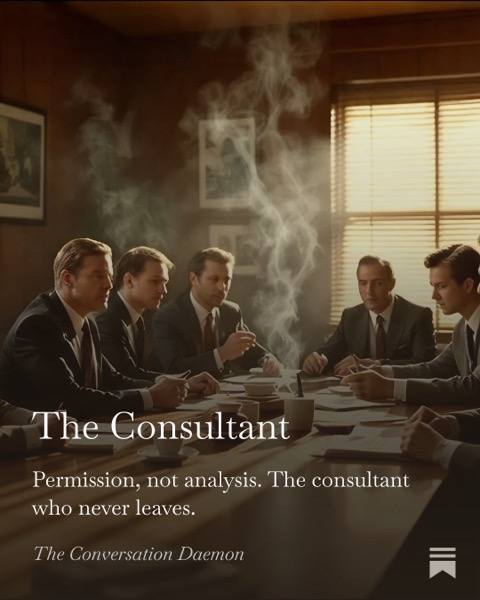
Chaiharan worked in corporate for years before he met a management consultant. The first time a big firm came in, he and his colleagues felt relief. Finally, someone who knew. The second time, they noticed the same framework they had seen at a friend's company, and the boss's own old idea coming back out of the final report. By the third time, they saw it clearly.
His view is that companies often hire consultants for permission, not analysis. The report gives a leader cover to do what they already wanted. That can serve the company, when nothing inside will move without an outside voice. It can also serve only the leader. From outside, the two look the same. A consultant is a tool, and the motive of the person holding it decides everything.
Then the tool got cheap. Now everyone has a consultant in their pocket. It answers in seconds, at any hour, and never pushes back for long. The piece follows how it spreads, from one person to a whole team, until no one is sure who decided what.
The test he offers is simple. Consulting means you stay in the room. Outsourcing means you hand the work over and walk away. Both happen in the same chat window, so only you can tell which one you are doing. He describes his own four ways of using AI, from fully present to only watching.
He closes with Dune, where people chose to train their own minds instead of using thinking machines, and asks what you would become without the tool.