Does my AI memory belong to me or the company?
In May, Chaiharan showed a memory you could read. Since then, ChatGPT, Claude, and Gemini have all learned to remember their users. So, he argues, remembering is no longer the point. The question now is whether the memory is yours.
Most assistants let you read a list of what they saved. That is better than nothing. But you cannot shape it, keep your own copy, or take it to another assistant. It is a way for a company to hold you.
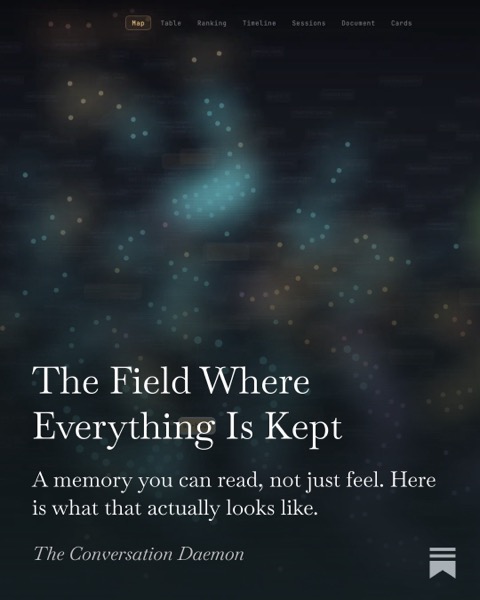
He shows what has changed in Muninn since the first piece. The memory has grown from a field of separate points into a web, where each memory brings its neighbors with it. When a chat opens, it hands the AI who he is, his rules, where they left off, and the memories he actually uses most. It holds his voice rules, a persona, and skills, all as memories he can open and rewrite.
Two changes matter most. Every memory is now encrypted with a key only the user holds, so even he, running the server, cannot read anyone's memories. He states the limits plainly, and the cost: lose your password and recovery code, and the memories are gone.
And the memory now writes itself out every fifteen minutes as plain files to the user's own GitHub or Google Drive, readable by anything, usable with any assistant.
It also holds what is still coming: tasks that grow louder as their day gets close.