What does it look like to see everything your AI remembers?
This piece is a guided look inside Muninn, the AI memory Chaiharan built, through its screens.
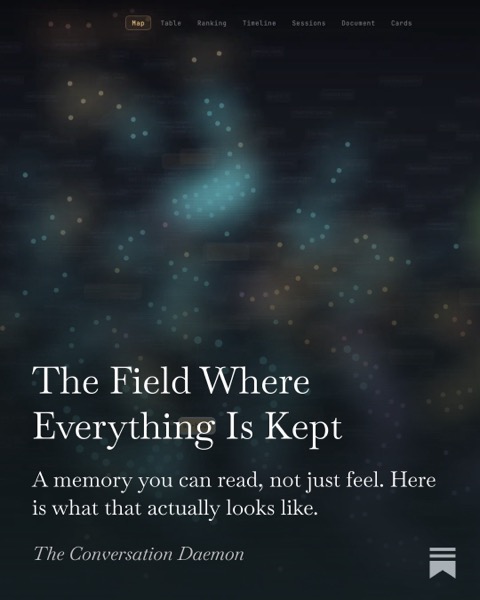
It opens on a map of every memory as a point of light, colored by area of his life, brightest where he keeps returning. He explains why he built a way to see inside at all. An AI can think, but it cannot remember you on its own. He gave his one a memory, and then a window into it, because a thing that remembers you in secret is not something he wanted to trust.
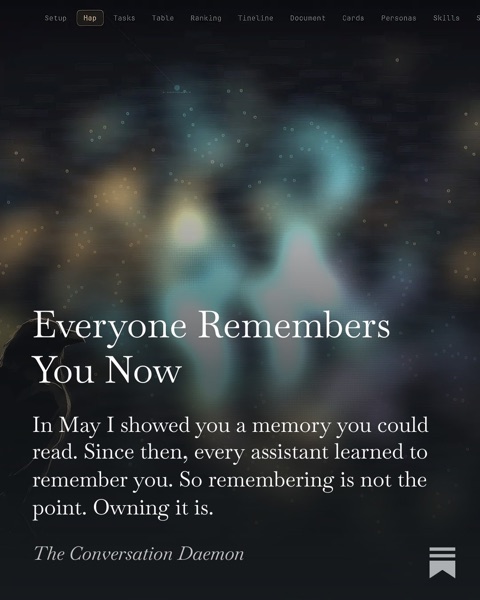
Then the views, one by one. A plain list of every entry that he can read, fix, or delete. A ranking by what he actually returns to, so the order that decides what surfaces first is visible, and he can argue with it. A timeline with one lane per area of life, showing where his attention really went, and keeping two dates for each memory: when it happened and when it was written down. A book assembled from memories, where moving a chapter means moving one pointer. And a card for every person he has written about.
He is honest that the people cards made him pause. It is a file on people. What makes it bearable is that it is his own file, about his own work, and every line can be read and deleted.
The memory even holds its own design, open to read like any other entry. And he can export all of it and leave.