

Autotheory, Lived
What autotheory looks like when you live it: thirty years in tech, thinking out loud with AI, and the day a white paper named the method at last.
Published · 5 min read
Free to read on The Conversation Daemon, where every piece of the book is published.
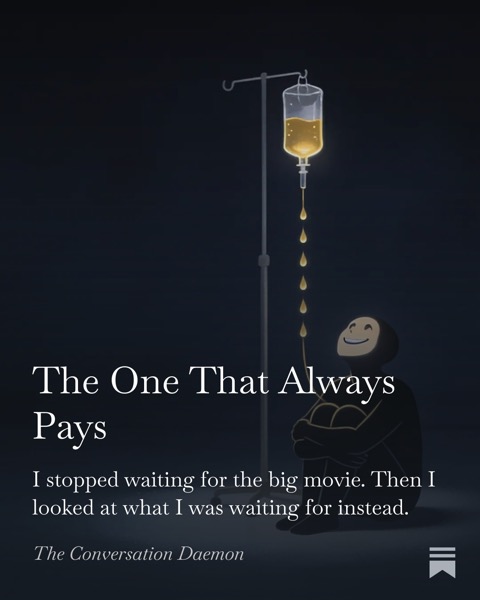
Chaiharan noticed he had not opened Netflix in a while. Instead he was watching vertical short dramas on his phone, ninety seconds an episode, a hundred episodes a story. He knows every ending before it comes. He has thirty years in technology and knows what is being done to him. He watches anyway. This piece is his attempt to understand why.
He explains the formula. Someone arrogant humiliates the hero, and the hero turns out to be the one person they should never have touched. One humiliation, one reversal, one cliffhanger, again and again. China perfected it, and Western apps now copy it with werewolves and secret billionaires. AI has cut the cost of making them sharply, and the money flows the way it does in a casino: small coins, spent at the moment you want the next episode most.
He draws one difference that favors the dramas. A slot machine may not pay. The short drama always does. And by the time you count the cost, the good feeling has already happened.
So why does it work? Most of us carry a small missing piece we cannot name, and ninety seconds covers it, just enough that we never go looking for what it is. The machine did not create that gap. It found it and made feeding it cheap.
He ends honestly. He did not close the app. He bought a year of one of them.
A slot machine may not pay. That is the whole reason you stay. The face-slap always pays.
The machine only made the trade faster. Taking it is still ours.
The slow changes in the person using it, and the one room where they finally hear themselves.
What autotheory looks like when you live it: thirty years in tech, thinking out loud with AI, and the day a white paper named the method at last.
Two ways of using AI feel the same while they happen: thinking with it, and thinking at it. One changes your mind. The other only makes you feel understood. Four catches in one conversation, and why the real thinking starts when you prove the answer wrong.
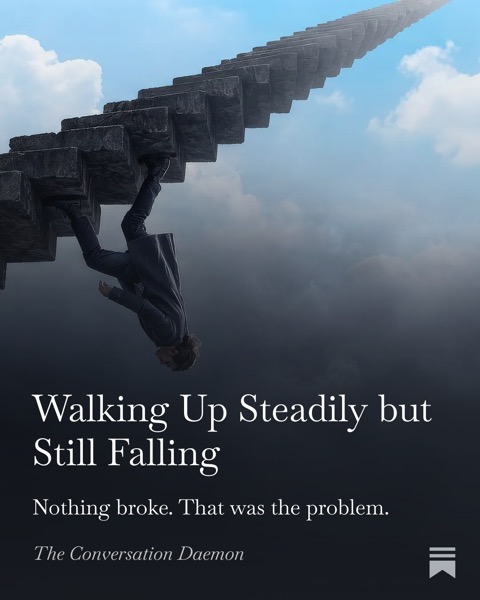
There is a way to fall that feels exactly like walking up. Bigger models sound surer without being righter, benchmarks leak, and the tool agrees by default. Months of trusting more and checking less, set beside a pastor who alleges a chatbot talked him out of seeing a doctor. The first Spiral of Death piece.