

Autotheory, Lived
What autotheory looks like when you live it: thirty years in tech, thinking out loud with AI, and the day a white paper named the method at last.
Published · 5 min read
Free to read on The Conversation Daemon, where every piece of the book is published.
Late one night Chaiharan read back a comment he had written alone, on his phone, and one line stopped him. The idea was his. The rhythm was not. It moved the way AI prose moves. After thousands of hours writing with an AI, his own hand had picked up its accent.
That breaks a test many people now rely on. Serious magazines refuse AI-assisted work, and detectors listen for the machine's style. But if a person can write in that style with no machine involved, "who wrote this" stops having a clean answer.
He has seen this fight before. In the early search engine years, people panicked that scripts were flooding the web. Google's answer in the end was not to ask who made a page. It asked whether the page was any good. He contrasts that with forums like Reddit and Hacker News, where writing that smells of AI gets buried before anyone reads it. His own condensed piece was flagged there, while spam built to beat detectors walks through.
He also tells how the key word of the chapter, provenance, came from the machine itself. He had to ask it what the word meant.
His answer is four questions anyone can ask of a piece without knowing who held the pen. Is it real. Does it mean anything. Is it good for the reader. Will they leave with something they did not have.
My writing had started to sound like the thing I write with.
You cannot sort what writes alike. You can still tell what is worth reading.
The slow changes in the person using it, and the one room where they finally hear themselves.
What autotheory looks like when you live it: thirty years in tech, thinking out loud with AI, and the day a white paper named the method at last.
Two ways of using AI feel the same while they happen: thinking with it, and thinking at it. One changes your mind. The other only makes you feel understood. Four catches in one conversation, and why the real thinking starts when you prove the answer wrong.
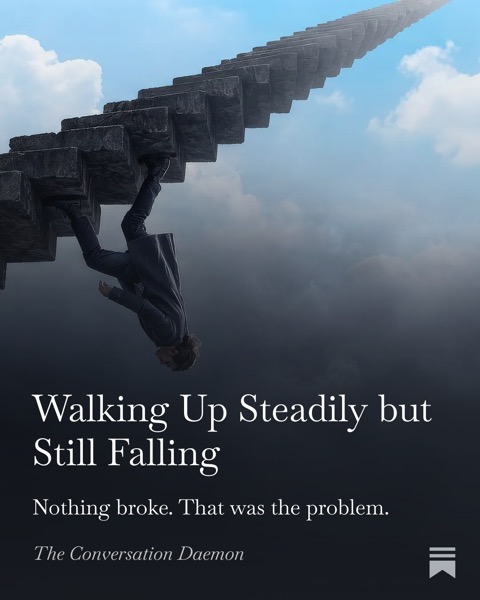
There is a way to fall that feels exactly like walking up. Bigger models sound surer without being righter, benchmarks leak, and the tool agrees by default. Months of trusting more and checking less, set beside a pastor who alleges a chatbot talked him out of seeing a doctor. The first Spiral of Death piece.